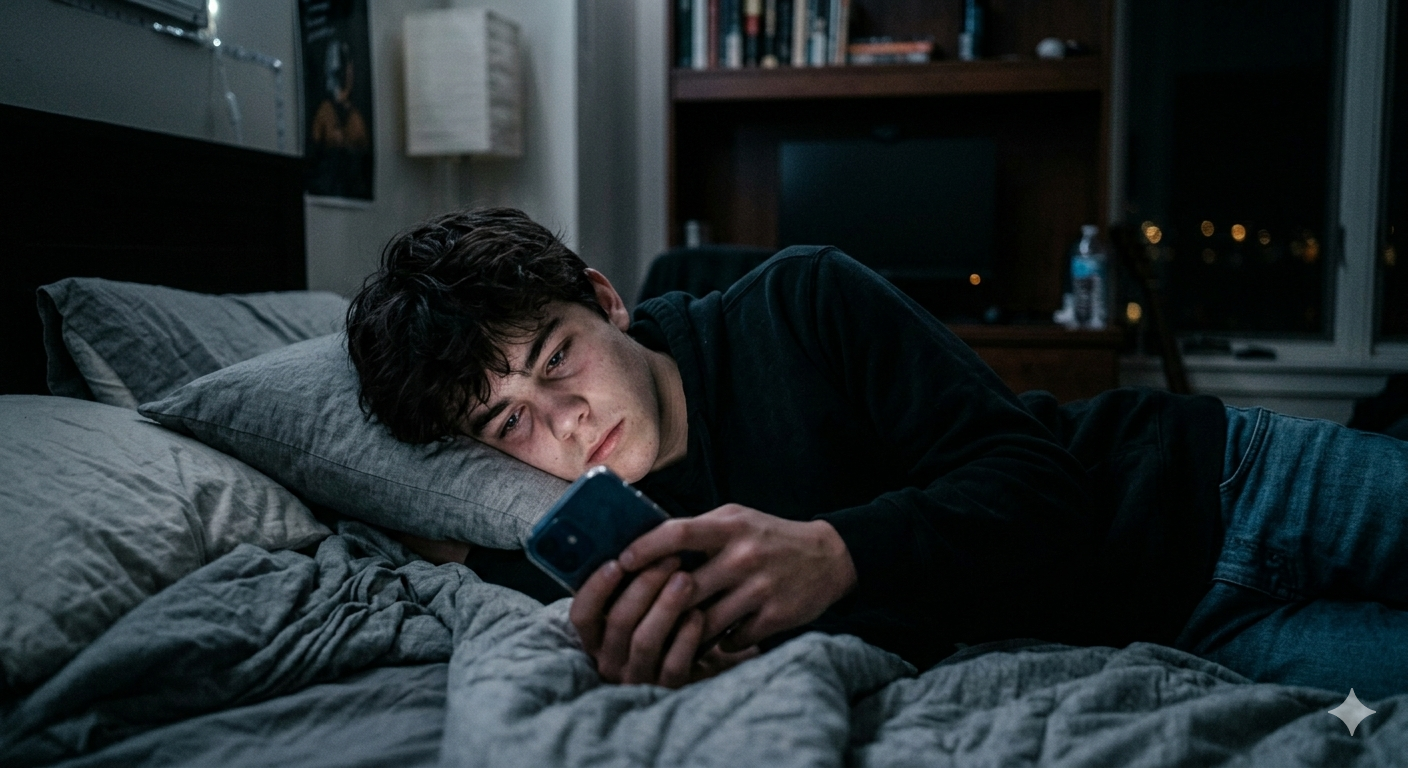
The Global Rise in Screen Time
We are witnessing a global behavioral shift, not a local trend.
-
Teenagers now spend 7 hours 22 minutes daily on screens on average (Exploding Topics)
-
In many countries, over 50% of teens spend 30+ hours weekly on devices (OECD)
-
Nearly half of teens say they are online “almost constantly” (Pew Research Center)
This is not limited to one region.
From the United States to Europe, South Asia, and the Middle East:
Screen exposure is increasing across all socio-economic groups.
Even more striking:
-
Around 82% of young people globally use the internet (United Nations)
This means:
Digital life is now the primary environment for teenagers.
What the Research Really Says (Beyond the Headlines)
There is a common fear:
"Screens are destroying children.”
But research gives a more nuanced truth.
According to UNICEF:
There is no simple direct link between screen time and mental harm (UNICEF)
Instead:
Impact depends on:
-
Type of content
-
Duration
-
Emotional environment
-
Parenting style
This is critical.
Key Insights:
It’s not just how much screen time—it's how it is used.
Why Screen Time Is Increasing So Fast
1. How the Pandemic Changed Everything
During COVID-19:
-
Schools went online
-
Social life moves to screens
-
Outdoor activities decreased
Children adapt.
But habits did not reverse.
2. Smartphones Became Personal, Not Shared
Earlier:
One device per family
Now:
One device per child
This dramatically increased usage.
3. Social Media Became Identity
Teenagers aren't just using apps.
They are:
-
Building identity
-
Seeking validation
-
Maintaining friendships
4. Lack of Structured Boundaries
Many parents struggle with:
-
Consistent rules
-
Monitoring usage
-
Balancing freedom vs control
⚠️ What Excessive Screen Time Is Doing to Teens
1. Reduced Attention Span
Fast content = fast thinking
Long focus becomes difficult
2. Emotional Instability
Studies show:
-
Increased irritability
-
Mood swings
-
Social comparison
WHO data shows problematic social media use rising among adolescents (World Health Organization)
3. Sleep Disruption
Screens affect:
-
Sleep cycles
-
Brain recovery
-
Daily energy
4. Weakening Real-Life Connections
More screens = less:
-
Conversation
-
Eye contact
-
Emotional bonding
5. Increased Risk Exposure
Globally:
-
Over one-third of young people report cyberbullying (UNICEF USA)
But Here’s What Most Parents Get Wrong
Mistake 1: Blaming Screens Alone
Screens are not the root problem.
They are a symptom.
Mistake 2: Sudden Strict Control
“Give me your phone!”
Leads to:
-
Resistance
-
Secret behavior
-
Broken trust
Mistake 3: Ignoring Emotional Needs
Children don’t just use screens for fun.
They use them for:
-
Escape
-
Connection
-
Identity
What Actually Works (Evidence + Real Experience)
✔ 1. Understand Before You Control
Ask:
What is my child getting from screens?
✔ 2. Focus on Balance, Not Bans
Research shows:
Moderate use can be beneficial (OECD)
✔ 3. Build Offline Connection
Children reduce screen time when:
Real life feels engaging
✔ 4. Set Clear, Consistent Boundaries
Not strictly. Not loose.
Consistent.
✔ 5. Model Behavior
If parents are always on screens:
Rules lose credibility
A Real Perspective from School Leadership
As a school leader, I see this daily.
Students today are:
-
More connected digitally
-
But less connected emotionally
Those with excessive screen exposure often show the following:
-
Reduced focus
-
Increased frustration
-
Lower engagement
But when balance is introduced:
Behavior improves significantly.
The Insight Most Parents Miss
The issue is not screen time.
It is what screens are replacing:
-
Family conversations
-
Play
-
Emotional presence
Final Thoughts
Screens are not the enemy.
But without your awareness, they can quietly reshape your child’s mind, behavior, and emotional world.
Parenting today is not about removing screens.
It is about guiding their use.
Cheat Sheet for Parents
-
Don’t panic; understand first
-
Focus on balance, not bans
-
Build offline engagement
-
Set consistent rules
-
Be a role model
What You Can Do Next
If this makes you pause and think about your child’s screen habits, don’t ignore that feeling.
Start small.
Observe more.
React less.
Because behind every screen habit, there is an emotional need waiting to be understood.
If you’re navigating teenage behavior, communication gaps, or emotional distance, you don’t have to figure it out alone.
I share practical, experience-based insights to help parents stay connected, calm, and confident.
Share this with a parent who is struggling to understand their child in today’s digital world.
FAQ
How many hours of screen time is too much for teens?
More than 7–8 hours daily outside educational use is considered excessive and may impact health and behavior.
Is screen time harmful for children?
Not always. Moderate, guided use can support learning and connection, but excessive use can affect sleep, focus, and emotions.
Why are teens addicted to screens?
Because screens provide instant rewards, social validation, and emotional escape.
How can parents reduce screen time without conflict?
By setting gradual limits, creating engaging offline activities, and maintaining open communication.
What is the biggest mistake parents make?
Focusing only on time limits instead of understanding the emotional need behind screen use.