If parenting your teenager is feeling harder than you expected, you are not alone. Many loving parents feel confused when their once-talkative child becomes distant, reactive, moody, or disrespectful.
One day they want independence. The next day they need reassurance. They push you away, then still expect your support.
This stage can feel exhausting, but it is also normal.
Teenagers are not trying to make parenting difficult. They are going through major emotional, physical, and neurological changes that affect how they think, feel, and respond.
The good news? You do not need to control your teen to guide them well.
You need practical strategies rooted in connection, consistency, and understanding.
In this guide, you’ll learn 15 practical parenting tips for teenagers that work to reduce conflict, improve communication, and strengthen your relationship.
Why Parenting Teenagers Feels So Hard
Adolescence is a transition period between childhood and adulthood.
Teens are developing:
-
Identity
-
Independence
-
Emotional regulation
-
decision-making skills
-
Social Awareness
At the same time, their brains are still maturing.
That means they often feel adult-sized emotions without adult-level coping skills.
This is why parenting teenagers requires patience, boundaries, and a different approach than parenting younger children.
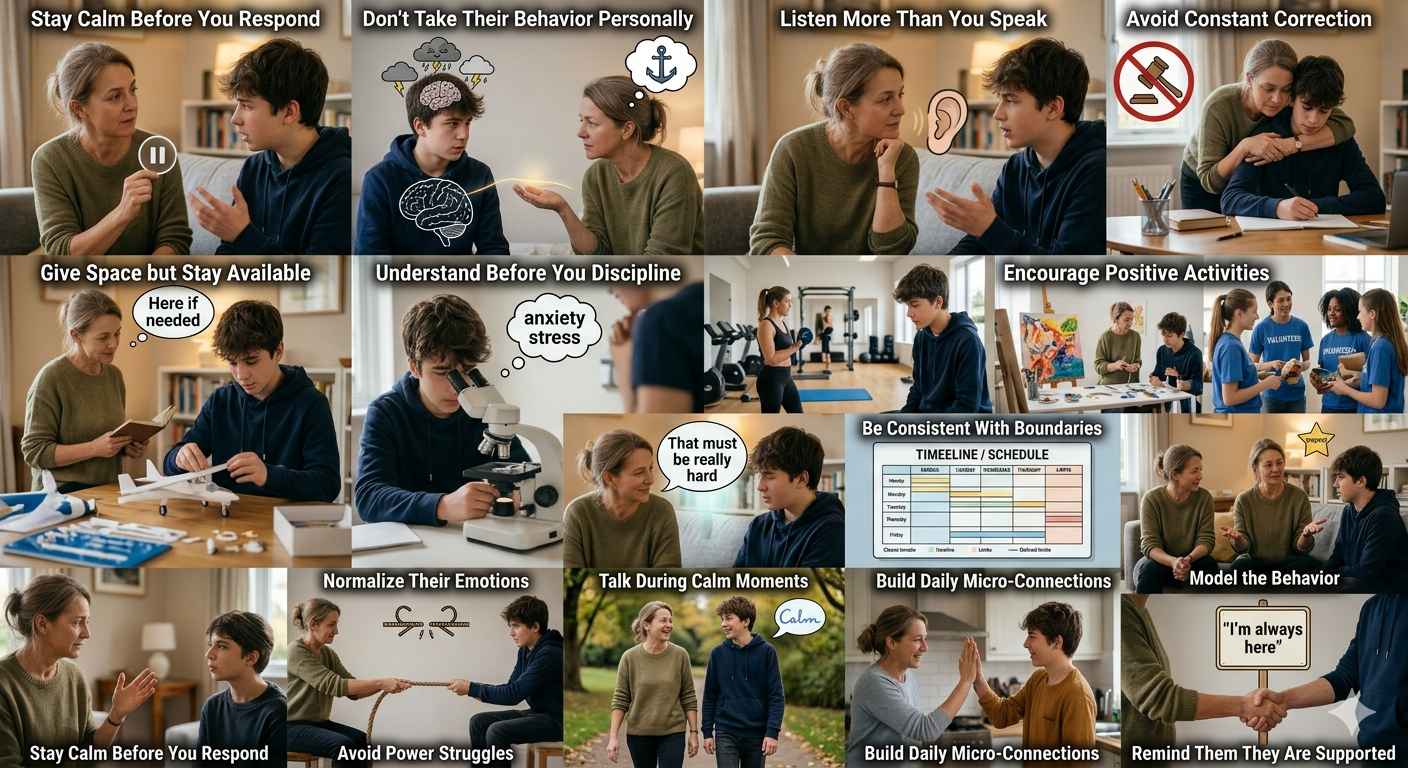
15 Parenting Tips
1. Stay Calm Before You Respond
When dealing with teenage behavior problems, your first reaction often matters more than your words.
Teenagers are highly sensitive to tone. If you react with anger, the situation usually escalates.
Calm and consistent responses reduce conflict and improve communication.
If your teen is rude, angry, or disrespectful, pause before responding.
Sometimes the most powerful parenting move is self-control.
Parent Reminder:
Your calm can regulate their chaos.
2. Don’t Take Their Behavior Personally
Many parents interpret teenage attitudes as intentional disrespect.
But often, teenage behavior changes are connected to stress, identity confusion, hormones, peer pressure, or emotional overwhelm.
When your teen ignores you, argues, or withdraws, it may not be rejection,it may be an internal struggle.
Seeing behavior clearly helps you respond wisely instead of emotionally.
3. Focus on Connection Over Control
One of the most common parenting questions is:
How do I deal with teenagers without constant conflict?
The answer is connection.
Control may create short-term obedience.
Connections build long-term influence.
When teens feel emotionally connected to their parents, they are more likely to listen, cooperate, and share what is happening in their lives.
Build trust before trying to correct behavior.
4. Listen More Than You Speak
Communication with teenagers often breaks down because parents talk more than they listen.
Teens open up when they feel heard—not when they feel lectured.
Instead of interrupting, correcting, or rushing to advise, let them finish.
Ask:
-
“Tell me more.”
-
“What happened next?”
-
“How did that feel?”
Listening is not passive,it is one of the strongest parenting tools you have.
5. Avoid Constant Correction
Many parents correct every small issue:
-
Tone
-
Messy room
-
Posture
-
Attitude
-
Habits
While guidance matters, constant correction creates emotional distance.
Your teen may start to feel judged instead of supported.
Choose what truly matters.
Not every behavior needs immediate feedback.
Protect the relationship while guiding growth.
6. Give Space but Stay Available
Teenagers need independence.
But they also need emotional security.
Healthy parenting means giving space without becoming distant.
Let them have privacy, opinions, and personal growth—while staying present and available.
Your message should be:
“I trust in your growth, and I’m here when you need me.”
7. Understand Before You Discipline
Before reacting, ask yourself:
What is causing this behavior?
Sometimes attitude is really
-
Stress
-
Anxiety
-
Loneliness
-
Embarrassment
-
School pressure
-
Friendship struggles
Behavior is often communication.
When you understand the emotion behind the action, discipline becomes more effective.
Correct the root, not just the symptom.
8. Encourage Positive Activities
Teenagers who are involved in meaningful activities often show fewer behavior problems.
Encourage:
-
Sports
-
Creative Hobbies
-
Reading
-
Volunteering
-
Gym
-
Art
-
Coding
-
Skill-building
Purpose reduces problems.
A busy teen with direction has less room for destructive habits.
9. Normalize Their Emotions
Teenagers often feel emotions deeply.
When parents say:
-
“It’s not a big deal.”
-
“You’re overreacting.”
-
“Just ignore it.”
They may feel misunderstood.
Instead, say:
-
“I understand why that upset you.”
-
“That sounds hard.”
-
“I get why you feel this way.”
Validation does not mean agreement.
It means emotional safety.
10. Be Consistent With Boundaries
Consistency matters more than harshness.
Many parents become either too strict or too unpredictable.
Clear boundaries help teens feel secure.
Examples:
-
Screen time rules
-
Sleep schedules
-
Homework expectations
-
Curfews
-
respectful communication standards
When rules are predictable, arguments often decrease.
11. Model the Behavior You Expect
Teenagers notice everything.
They learn more from what you do than what you say.
If you want respect, show respect.
If you want calmness, practice calmness.
If you want honesty, be honest.
Your behavior teaches louder than lectures ever will.
12. Avoid Power Struggles
Trying to “win” every argument damages the connection.
Not every disagreement needs to become a battle.
Choose your battles wisely.
Ask:
-
Is this a real issue?
-
Is this about values or ego?
-
Will this matter in a week?
When parents step back from unnecessary power struggles, teens become less defensive.
13. Talk During Calm Moments
Timing matters.
Serious conversations during emotional explosions rarely go well.
Choose low-pressure moments such as:
-
Car rides
-
Walks
-
meal prep
-
Casual evenings
-
Errands together
Many teens talk more when eye contact pressure is reduced.
Use calm moments for deeper conversations.
14. Build Daily Micro-Connections
Strong relationships are built in small moments.
You do not need hour-long talks every day.
Try:
-
A short check-in
-
Shared humor
-
Asking about their interests
-
Noticing effort
-
Sitting together briefly
Small moments repeated daily build trust over time.
15. Remind Them They Are Supported
Teenagers may act independently, but they still need reassurance.
They are navigating:
-
Identity
-
Friendships
-
Academic pressure
-
Future anxiety
-
Self-worth struggles
Say:
-
“I’m here for you.”
-
“You don’t have to figure everything out alone.”
-
“We’ll handle this together.”
Support creates resilience.
A Real Perspective From School Experience
As a school leader, I often see teenagers in their most unfiltered moments.
Students labeled:
-
Difficult
-
Lazy
-
Disrespectful
-
Careless
are often actually:
-
Overwhelmed
-
Anxious
-
Disconnected
-
Misunderstood
When they are guided with patience instead of pressure, behavior often changes dramatically.
This is a reminder for parents:
Many teens need understanding before they need consequences.
The Insight Most Parents Miss
The goal is not to control teenagers.
The goal is to understand them.
Because when understanding increases:
-
Conflict decreases
-
Trust grows
-
Communication improves
-
Cooperation becomes easier
Final Thoughts
Teenagers are not problems to fix.
They are individuals in transition.
If you remain:
-
Calm
-
Present
-
consistent
-
Understanding
You do not lose your child during these years.
You strengthen a relationship that can last for life.
Quick Cheat Sheet for Parents
✅ Stay calm first
✅ Don’t take behavior personally
✅ Build connections daily
✅ Listen more than you lecture
✅ Set clear boundaries
✅ Encourage growth activities
✅ Choose trust over control
FAQ:
Why is parenting teenagers so difficult?
Because teens experience rapid emotional, physical, and psychological development while still learning self-control and decision-making.
What is the most important thing teenagers need?
Emotional support, consistent boundaries, and connection with trusted adults.
How can I improve my relationship with my teen?
Listen more, criticize less, stay calm, and create regular moments of connection.
Is teenage behavior normal or a problem?
Most teenage behavior is developmentally normal. Persistent extreme changes may need additional support.
How do I discipline a teenager without yelling?
Stay calm, be clear, focus on consequences, and discuss issues during calm moments instead of heated ones.